¶ Issue Description
"Stripped screw," "stripped thread," and "stripped head" are all common ways of describing screw failure, but in practice it is important to distinguish which part of the screw is damaged.
This article addresses the following situation: the geometry of the recess in the screw head (e.g. slotted, Phillips, hex, or Torx) is worn out, so the driver spins freely inside it and cannot transmit torque.
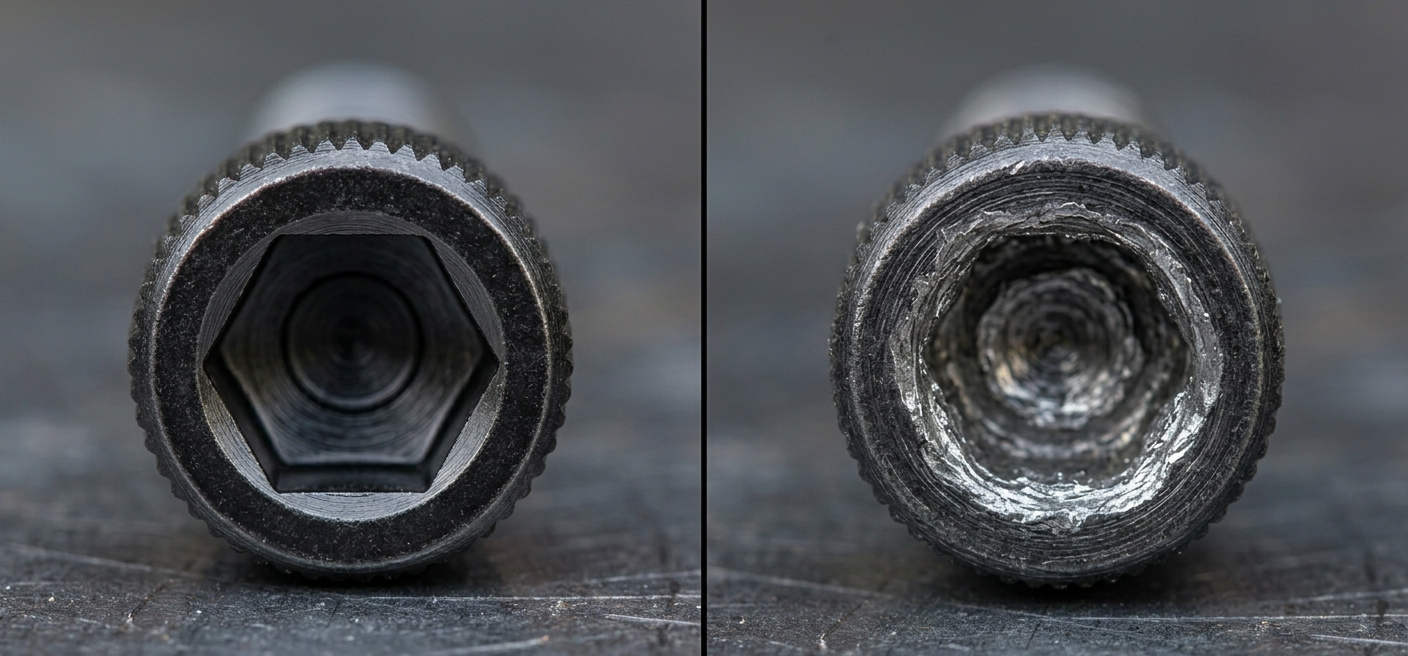
¶ Possible Causes
- Wrong driver size or type: a gap exists between the driver and the walls of the recess, so the force concentrates on just a few edges, which quickly wear flat.
- Insufficient downward pressure or force applied at an angle: the driver slips out of the recess at the moment of peak load, and a single slip causes far more wear than normal driving.
- The driver itself is already worn: once its edges are rounded, it can no longer grip the walls of the recess, and it accelerates damage to the screw head.
- Continuing to apply force when the screw will not turn: the force cannot turn the screw, so it acts entirely on the walls of the recess — the part most easily damaged.
¶ Procedure
Method 1: Add a rubber layer to increase friction (for lightly stripped screws)
Place a rubber band, balloon, nitrile glove, or similar item over the screw head, press the rubber layer into the recess with the driver, and try to back the screw out.
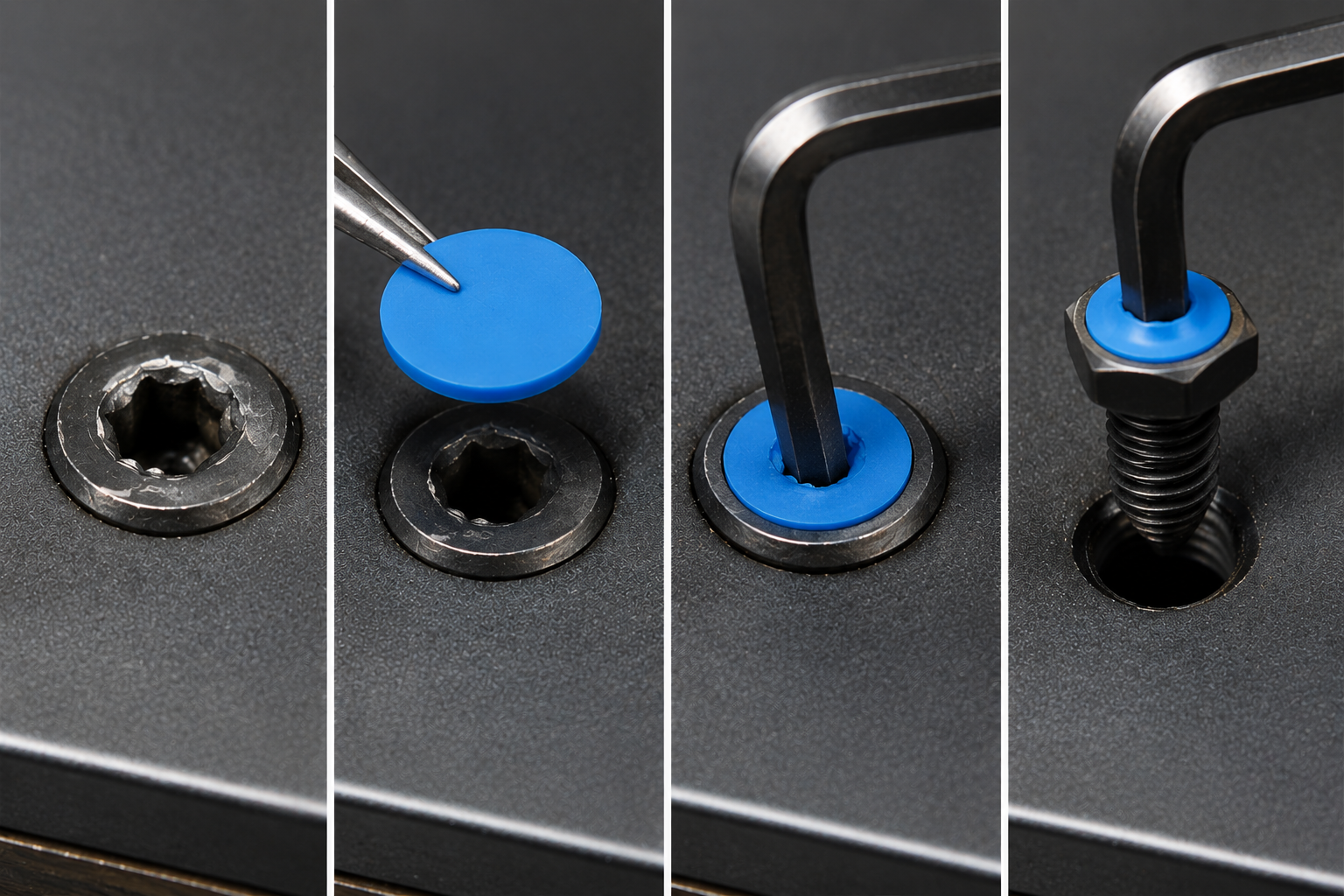
Method 2: Grip the outside of the screw head and turn it out
You can refer to Screw Removal Pliers User Guide.
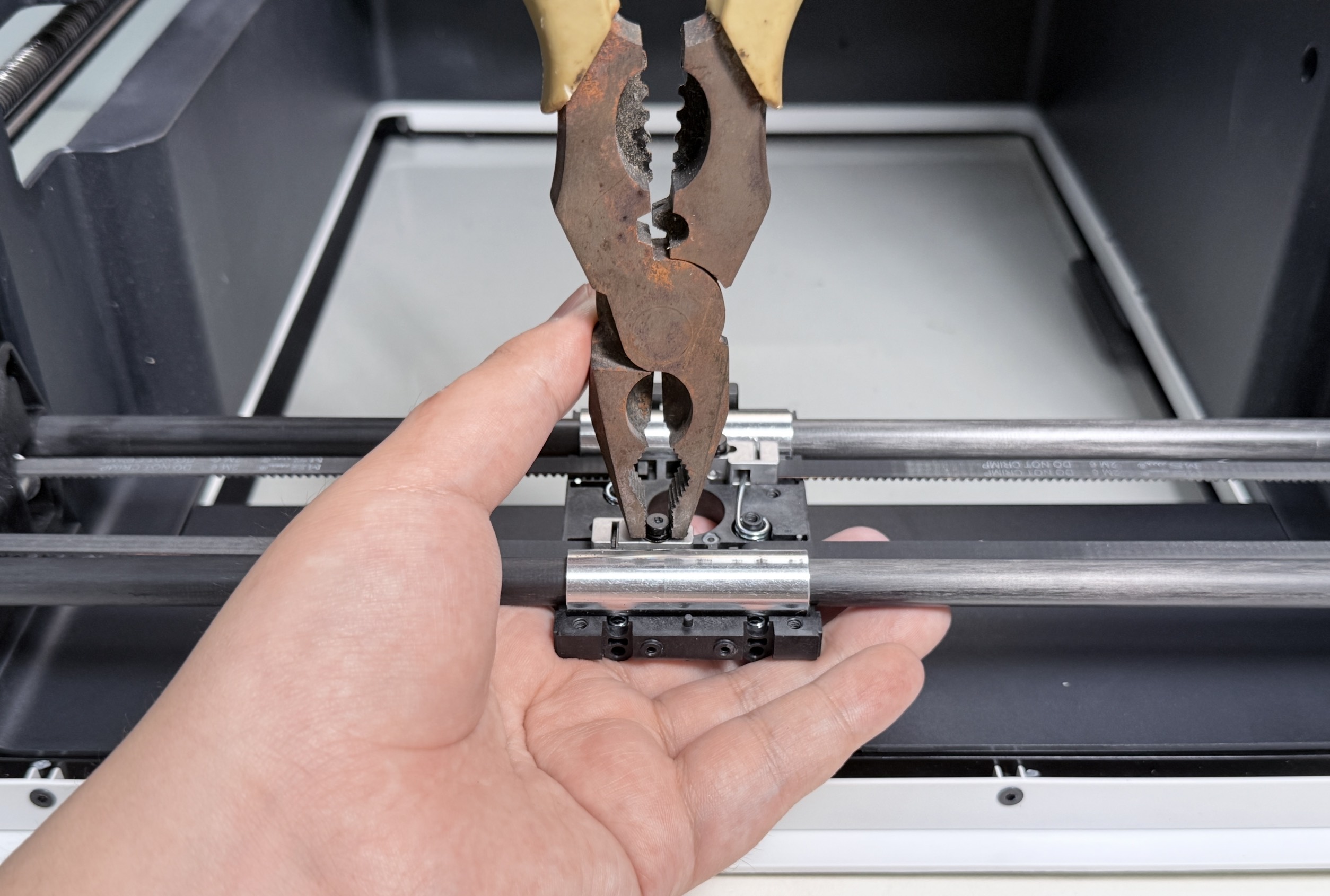
Method 3: Cut a slot in the screw head
Use a cutting disc on a rotary tool to cut a straight slot across the screw head, then back the screw out with a flat-head screwdriver.
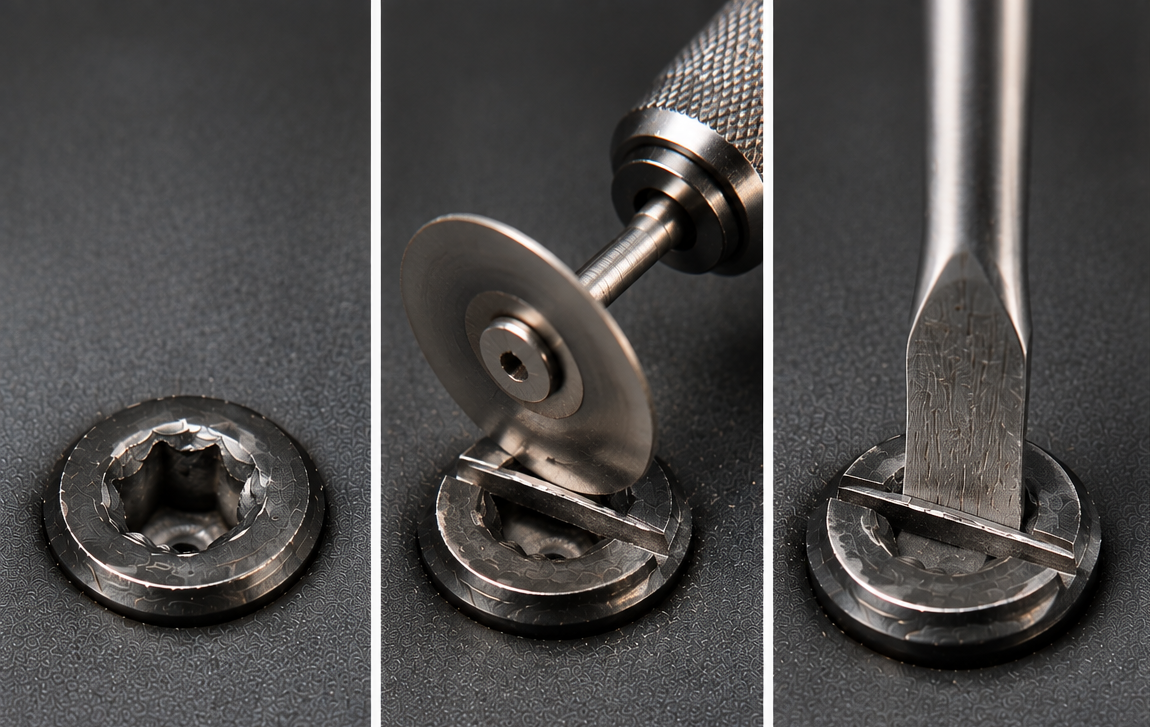
This method is not suitable for low-profile screws or high-hardness screws (such as stainless steel screws).
Method 4: Use a dedicated screw extractor bit
You can find tools like the one shown below by searching for screw extractor on shopping platforms.
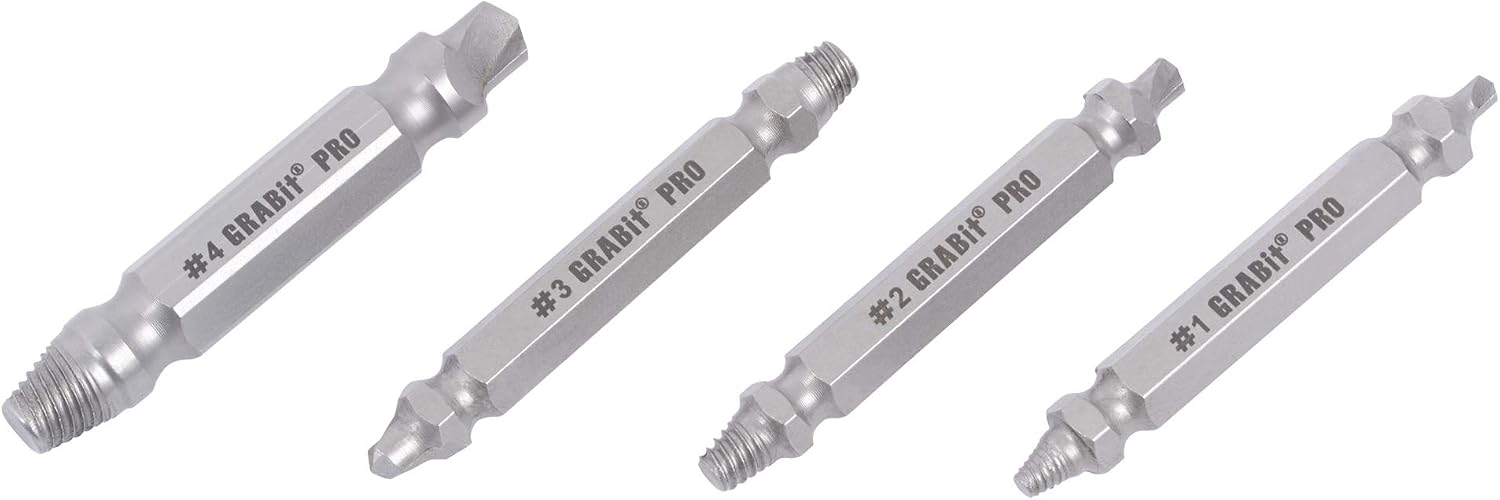
First drill into the screw with the drill end of the tool, then remove the screw with the extractor end. Keep the tool pressed firmly against the screw during both drilling and extraction.
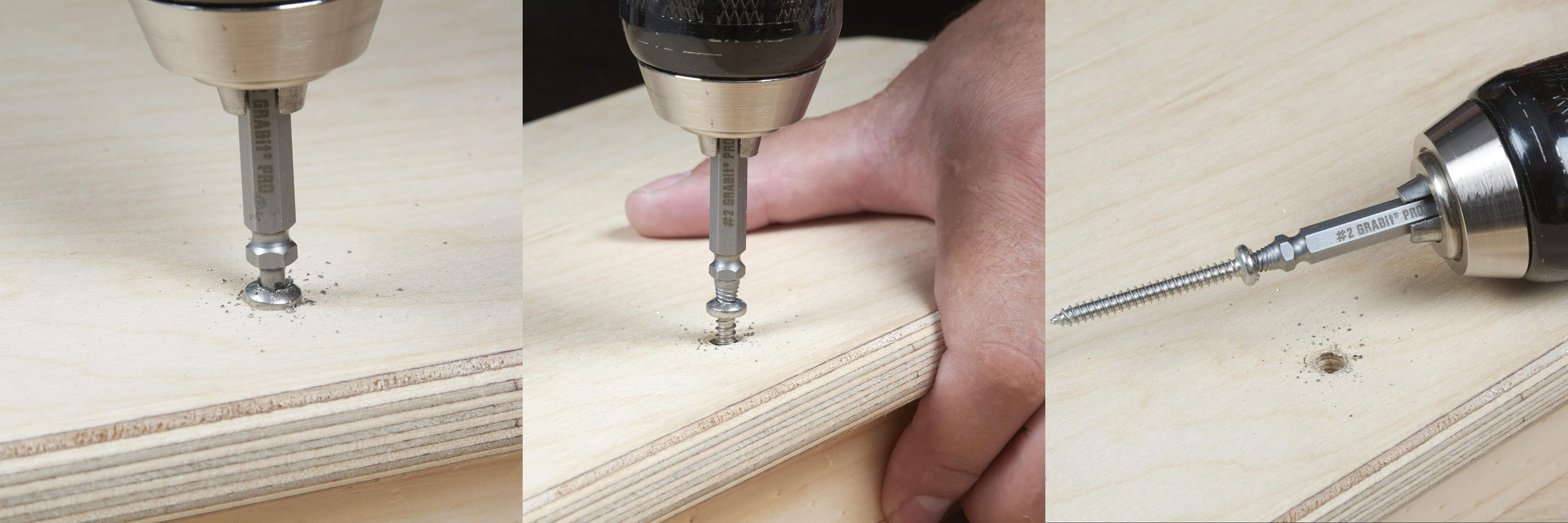
Tools from different manufacturers may be used differently. Pay attention to whether the drill end and the extractor end should be turned clockwise or counterclockwise.
¶ Endnote
If your issue remains unresolved, please contact technical support, our dedicated support team will be more than willing to assist you in resolving the issue.
If you have any suggestions or feedback about this wiki, feel free to leave a comment below. Every piece of feedback helps us improve our documentation.