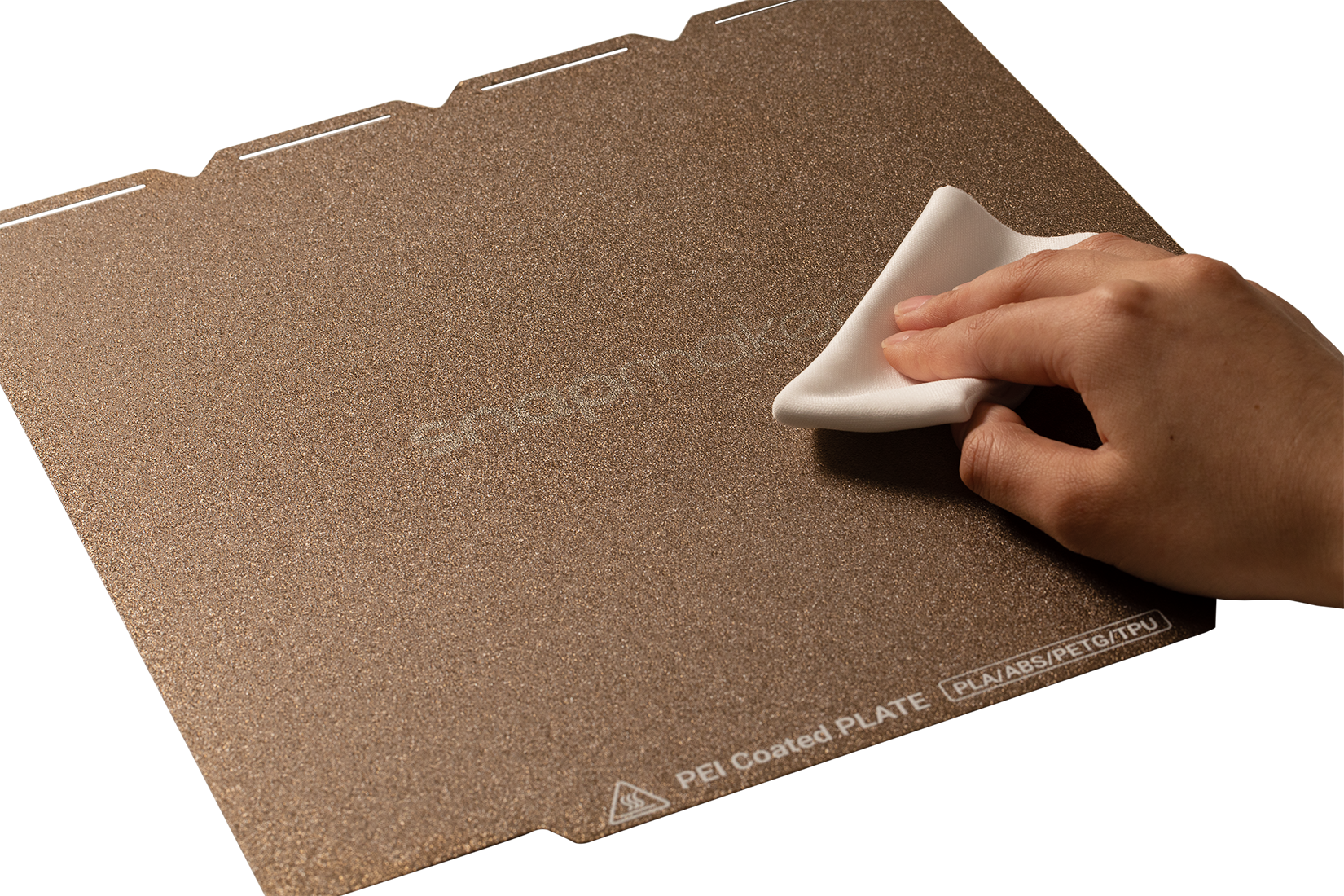
¶ Before You Start
¶ 1. What is a PEI steel sheet?
¶ 1.1 Definition
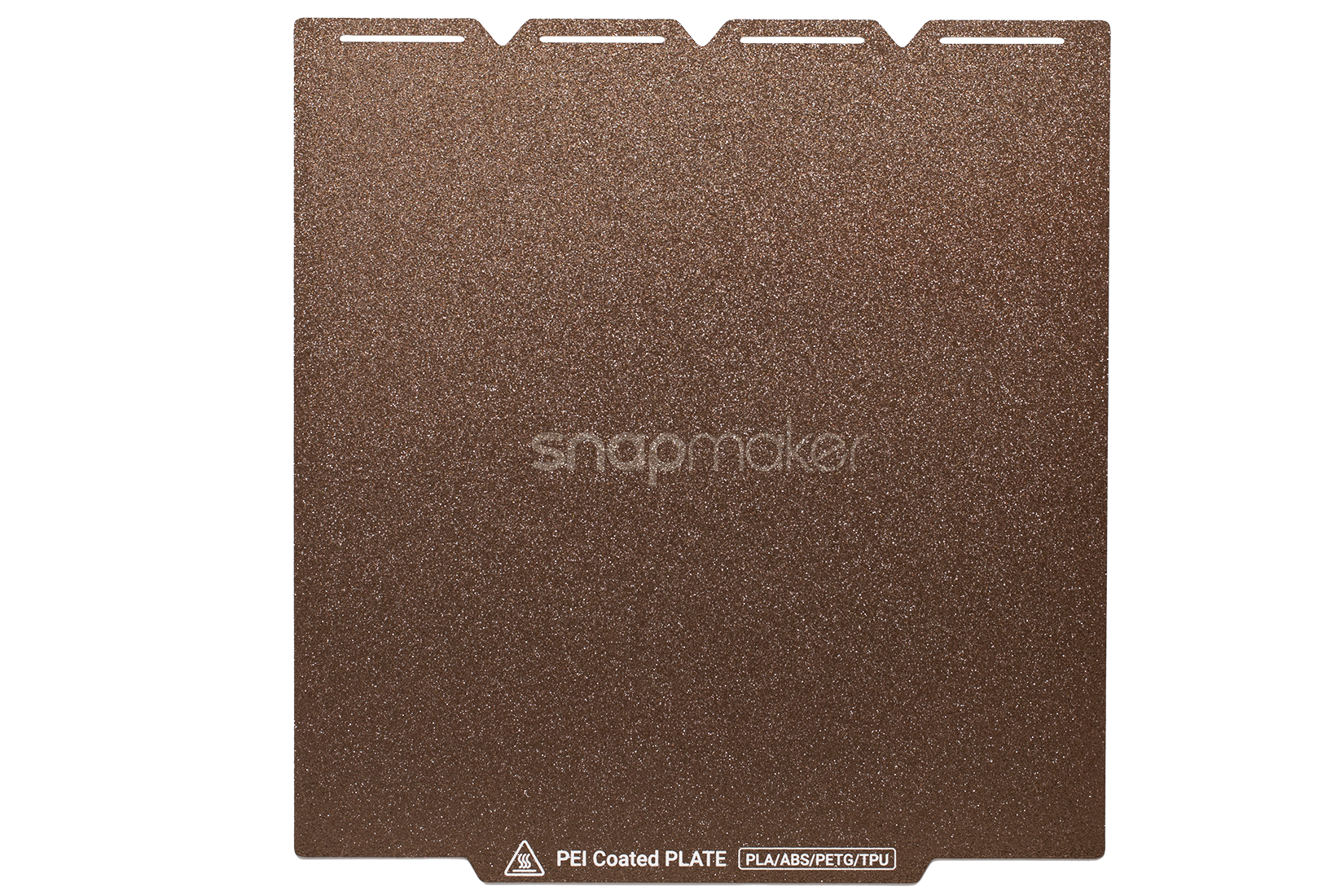
PEI (Polyetherimide) is a durable build surface widely used in 3D printing. It is compatible with both heated and unheated print beds, providing strong adhesion to a variety of filaments without the need for glue or other surface preparation, which makes it very user-friendly.
¶ 1.2 Advantages
- Wide Material Compatibility
- Strong Heated Adhesion
- High Temperature Stability
- Good Wear Resistance
¶ 2. Why your PEI steel sheet needs cleaning?
¶ 2.1 Ensuring uniform adhesion
The core function of a PEI steel sheet is to provide consistent adhesion. However, dust, skin oils, and other contaminants accumulated during regular use can form a barrier layer, preventing the filament from properly bonding to the steel sheet. This may result in poor adhesion, warping, or even print failure. Effective cleaning removes these contaminants and restores the sheet’s uniform adhesive performance.
¶ 2.2 Ensuring a flat Bottom surface for subsequent prints
After printing, the PEI steel sheet often retains residues such as small fragments, brims, or support structures. If not removed promptly, these remnants can affect the flatness of the bottom layer in the next print and may also cause uneven heat transfer from the heated bed. Thus, regular cleaning is essential for maintaining the PEI steel sheet and improving the success rate of future prints.
¶ 3. When to clean your PEI steel sheet?
- You can perform routine cleaning after each print to remove dust, debris, fingerprints, and grease.
- Clean promptly when you notice built-up residue on the surface to avoid affecting the flatness of future prints.
- Clean in a timely manner when decreased adhesion is detected on the PEI steel sheet to restore surface performance.
- You may conduct preventive cleaning before important or large prints to increase the success rate.
- It is recommended to perform periodic deep cleaning to maintain surface performance over the long term.
¶ Let's Do It
¶ Preparation
Please wait for the PEI steel sheet to cool down to room temperature (recommended below 40°C) before proceeding with any cleaning operations.
Please remove the PEI steel sheet from the printer before cleaning. You can choose from the two methods below for different situations:
| Description | Method 1 | Method 2 |
|---|---|---|
| Scenario | For cleaning surface contaminants such as dust, fingerprints, and grease. | For removing stubborn print residue. |
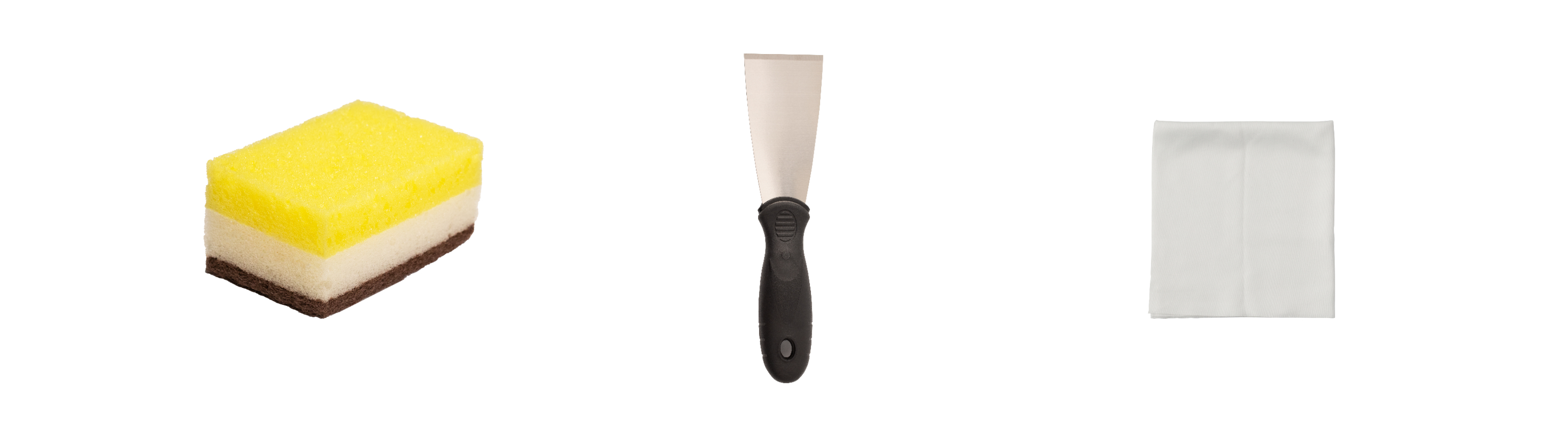
| Tools | - Dish soap - Sponge - Paper towel or wiping cloth |
- Scraper - Wiping cloth |
| Frequency | Every 5–10 prints to maintain adhesion. | As needed when residue builds up before the next print. |
¶ Using dish soap
We recommend using a sponge for cleaning, as its soft texture can effectively remove debris from the textured grooves. A soft cloth may also be used as an alternative.
Avoid hard or abrasive cleaning tools (such as steel wool), as they may scratch the PEI coating.
Avoid acetone, as it corrodes the PEI surface, causing permanent damage and destroying print performance.
- Remove the soiled PEI steel sheet from the printer.

- Rinse the PEI steel sheet thoroughly with clean water to remove dust and debris.
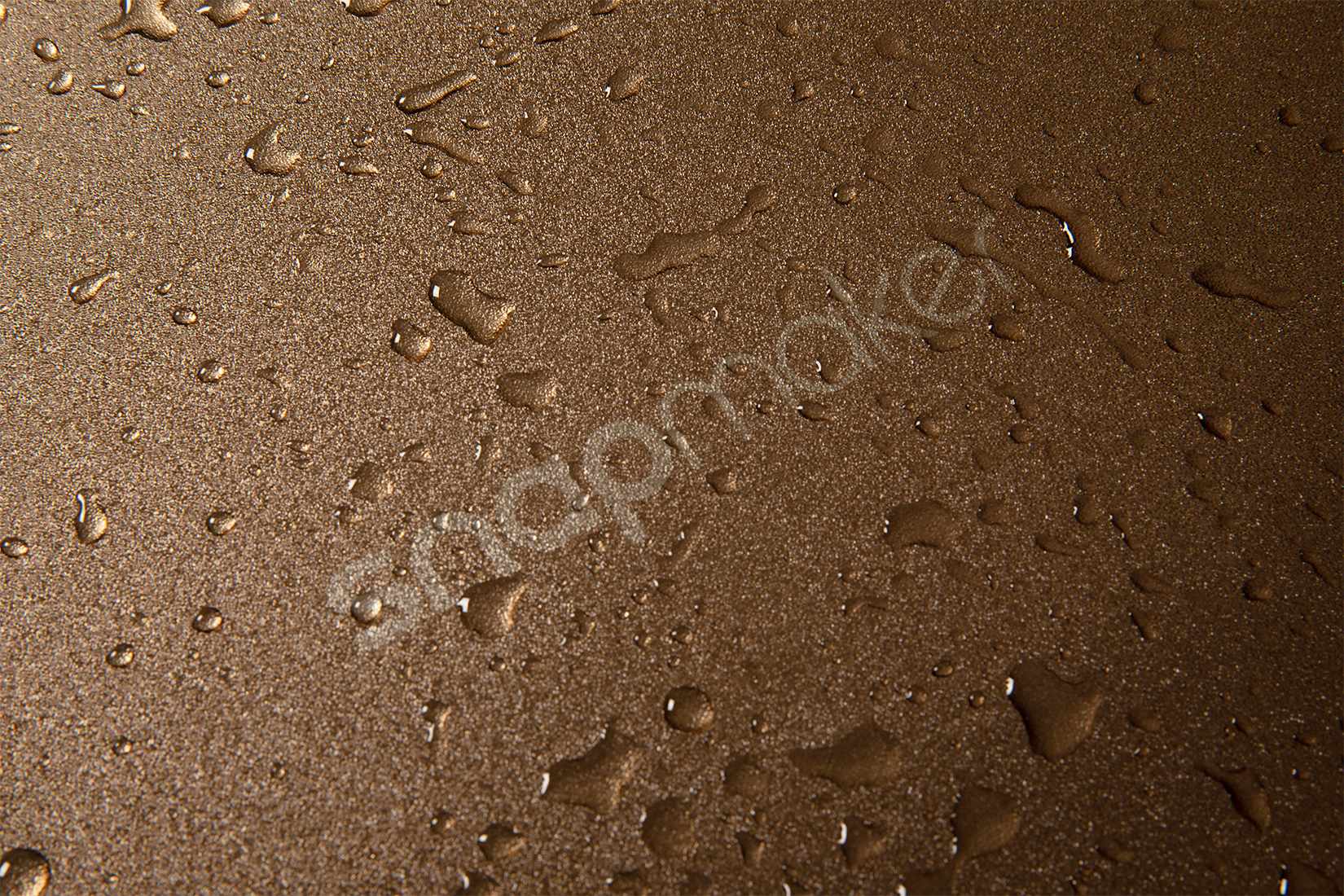
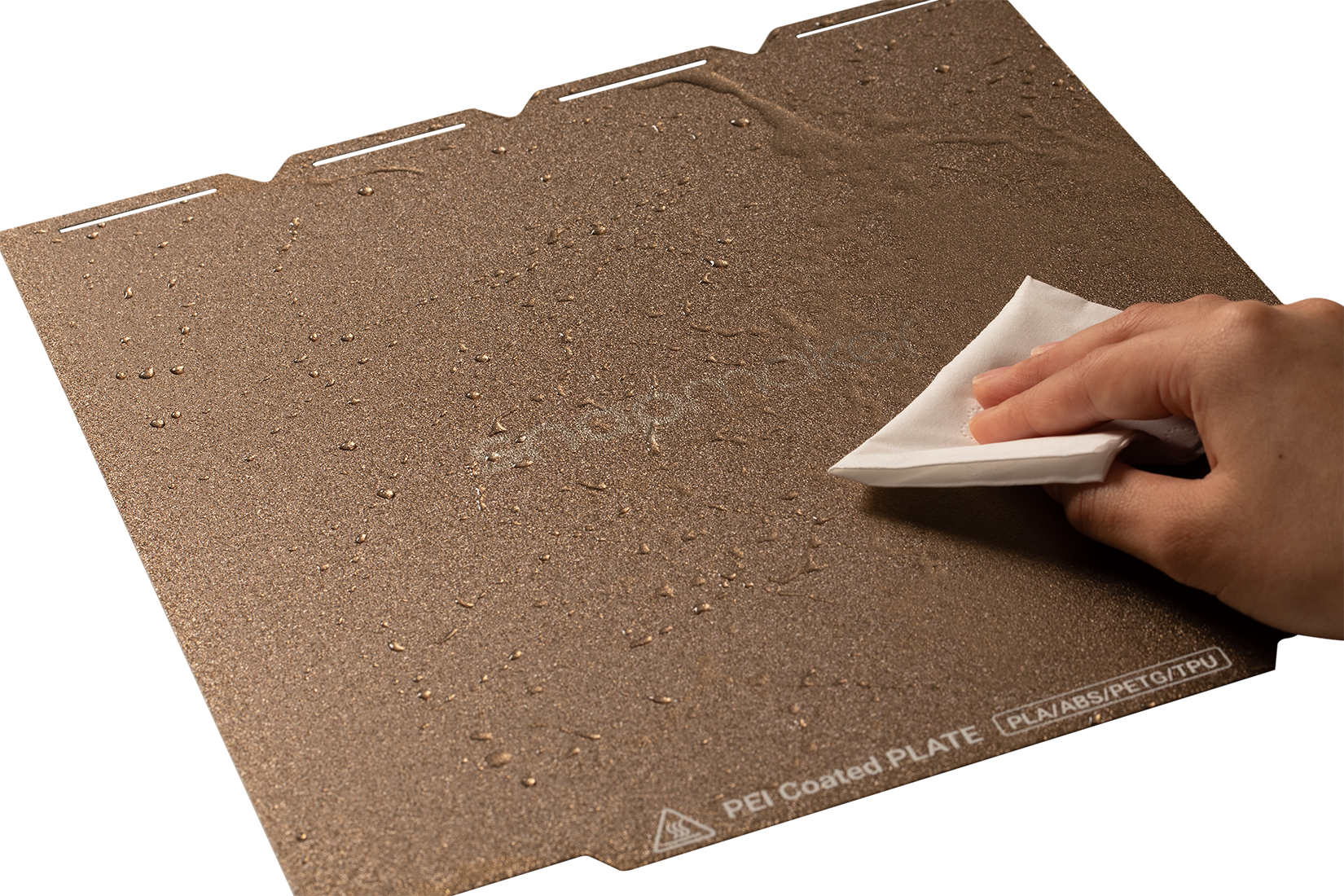
- Apply dish soap to a sponge and gently scrub the entire surface. Pay extra attention to areas touched by hand or with print residue.

- Rinse off all soap with clean water to ensure no residue remains.
- Dry the surface with a clean paper towel or wiping cloth, then allow it to air-dry completely in a well-ventilated area.
¶ Using a scraper
We recommend using the scraper that came with your printer.
Do not use sharp metal tools (such as craft knives, screwdrivers, etc.), as they may scratch the PEI coating.
If you are using a smooth PEI steel plate, do not use a scraper to clean the plate or remove the finished print, as this may damage the PEI film.
- Place the PEI steel sheet flat on a table.
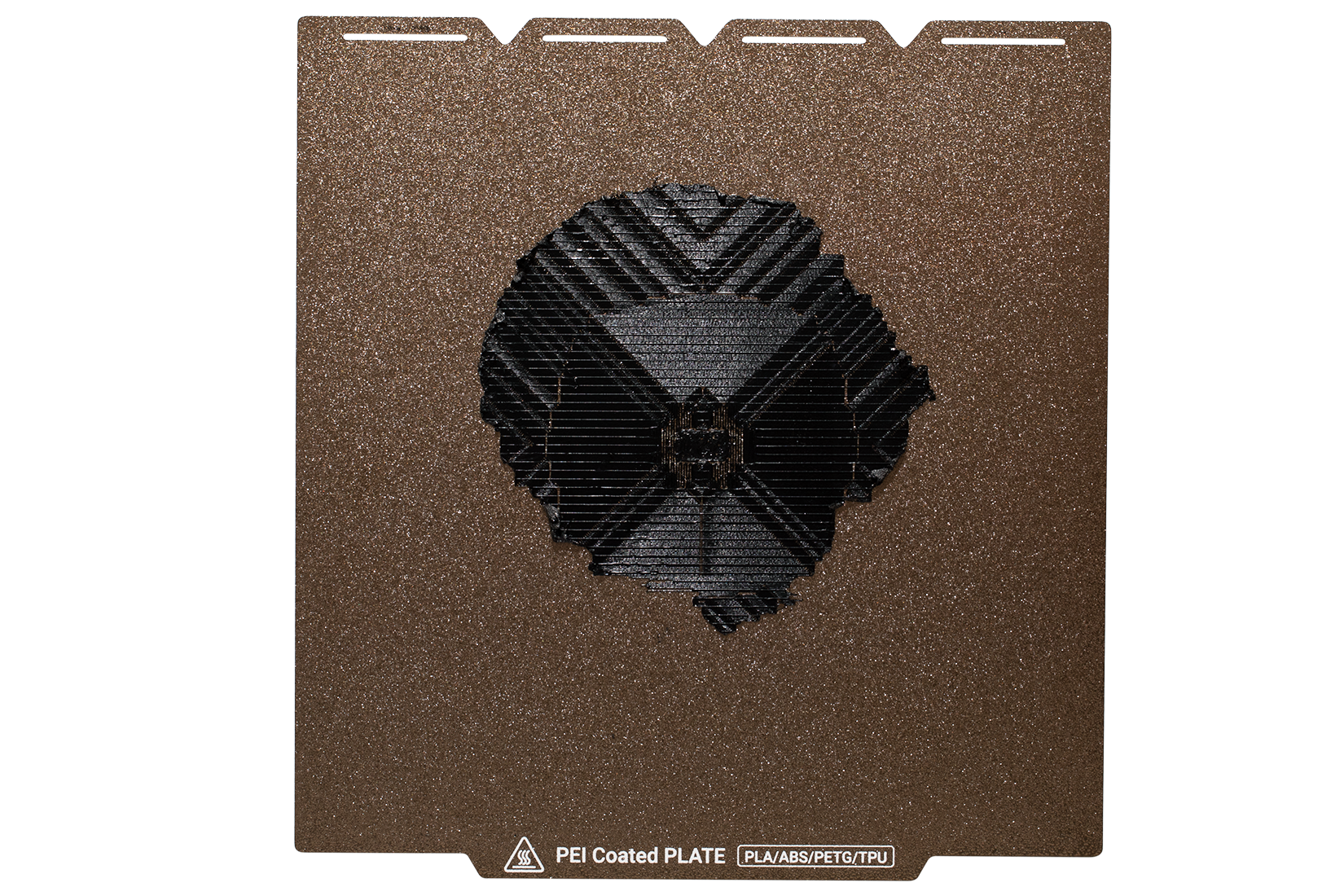
- Hold the scraper at a low angle of 15°–30° against the steel sheet, keeping the blade as close to the surface as possible.
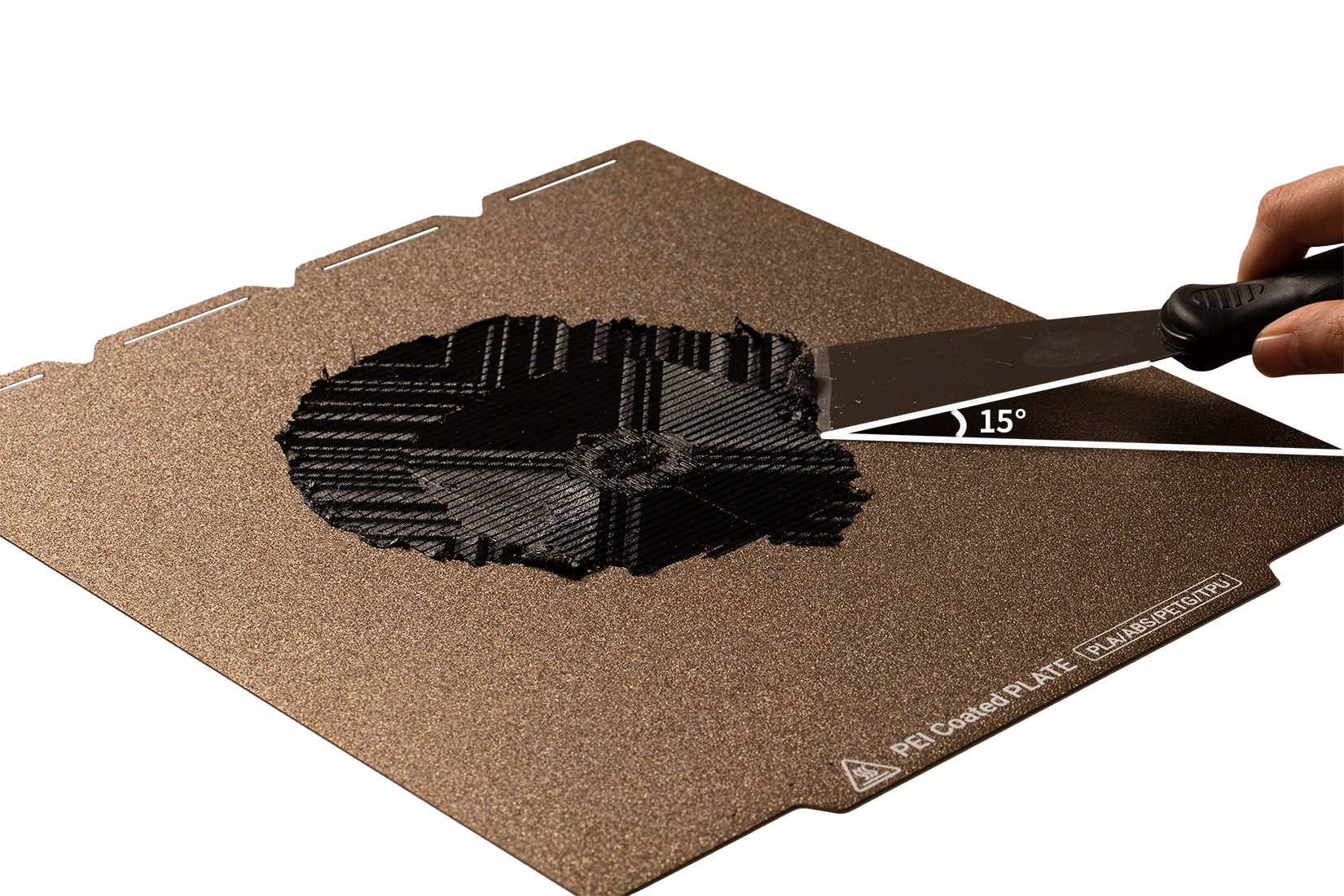
- Starting from the edge of the residue, slide the tip of the blade between the waste material and the PEI steel sheet.
- Push the scraper forward horizontally with steady, even force. Avoid prying upward.
- Wipe the surface with a clean paper towel or wiping cloth to remove debris and grease.